Two examiners in this story. One read the prior art. The other did not.
Welcome to the blog. Before we get to the Post Grant Review itself, let me explain the context leading up to this — the part where I tried to prevent all of this, paid a fee on top of it all, and was summarily ignored.
By The Inventor
Background — this is Dispatch No. 1, the start of a series documenting my pro se Post Grant Review of U.S. Patent 12,460,537, the patent I believe copies oil-well rotation-sensing I invented and disclosed first. This one is the setup: I tried to stop this before it issued — paid a fee to do it — and was ignored.
If you've read the backstory — the nine-panel version with the soldering iron and the gentleman in the mask — you already know the foundation. A patent application — my patent — became a public blueprint, the blueprint got reworded, and the official record now lists the wrong name. This blog is where I document a hopeful fix: a Post Grant Review (PGR) at the USPTO, and how I believe the system will ultimately fail me (yet again). I am pretty naive to think the system will rise to the occasion, but stranger things have happened. But more importantly, I hope to show how the fee structure is incredibly unfair. It punishes the inventor who took all the right steps and rewards the USPTO for its error.
You should also start by reading my disclaimer on the About Page. This is a story from my perspective and this is all just my opinion. If you find any errors or misstatements, I am happy to correct the record. Heck, if someone wants to do a guest post, I'd be thrilled. Even if it's just to tell me how wrong I am.
No safety valves
Once someone files a patent, what happens next is an entirely subjective process. That process failed me here. It failed because there was no mechanism to correct the record. When you look into this, the "procedural safety valves" are truly insane. None of them address the most common case. And my case is part of a growing problem. It's not just me. You're going to see more and more cases like this because the system is so ineffectual in its current state.
Derivation
What about a Derivation Proceeding? That tool (§ 135) is narrower than it sounds. It's built for one specific fact pattern: you privately conceived the invention, communicated that conception to someone, and they raced to file it as their own without your authorization. The gate is narrow on every edge — you need your own pending application claiming the same or substantially the same invention, and you have to petition within a year of the first publication of the offending claim. My problem doesn't fit any of those edges cleanly: there's no private communication of my conception to point to (they had a published document to read), the one-year window is unforgiving, and the proceeding is really about who-derived-from-whom, not about a bad patent built on a public disclosure. So derivation isn't the vehicle. Maybe one of you fancy lawyers could argue otherwise.
I have another (ongoing) story that almost fits this too (it'll be a while before I get to tell that story… that's the fourth rip-off). It's much closer to a derivation, but I still filed first by a couple of weeks, so derivation doesn't apply. Derivation only applies if you copy and apply first. Not if you copy and apply after. Unfortunately that doesn't seem to matter as you'll see in the main story. This one could still get a patent (and probably will).
Protest
Sounds good, I definitely protest the shenanigans, but the craziest thing is you either need to do it before it publishes or you need the applicant's permission. How the heck would I know someone had copied my work — which is what I'm convinced happened (stay tuned for that part of the story) — before it publishes? And why on earth would I need to get their permission to protest after it publishes?
Examination
It should be abundantly clear I'm not a lawyer, so feel free to point out the nuances and correct me here.
It truly is crazy that all the procedural options only cover incredibly specific corner cases. Not the most blatant and obvious one. The normal examination process is "supposed" to handle that. There's nothing to stop that examination process from going off the rails.
But I don't want to start with the PGR, ex parte, derivation, protest, inadequate examination, etc. Long before that, I found their application and had the simple naive thought, “if the examiner just does half as good a job as the one examining my application, I should be fine.” If the system just worked… This is the part that turns this from “bad luck” into something worth a website.
What happens when a bad patent application gets examined by an inattentive examiner? Let's find out.
Gaming the system
[Sidenote]
But first, if you're not a patent professional, you might not know (or care to know) how this process works. Corporations are gaming the system. That's not unique to this story. There are websites dedicated to ranking examiners. Did you hit the lottery and get an easy examiner? Did you get the whammy and get a hardass? You get to find out reasonably early in the process. It's shocking how subjective this process is. You only need to convince one person you invented something, and there are no safety valves beyond the honor system. How misleading you can be without getting in trouble is truly shocking. I'll provide some very detailed examples.
This gaming of the system is only going to get worse. In 2026, it's trivial for anyone to do an in-depth analysis of an examiner's historical correspondences to profile what types of arguments work and what arguments don't (seriously, AI is really good at this, and you don't even need a fancy third-party tool — it's all sitting right there on the USPTO's site). That capability exists, it's open to anyone, and — to be clear — it's not something I've done to the examiner in my own case. The point is that it isn't invention. [End Sidenote]
Patents are far too easy to get!
It shouldn't be this difficult to get rid of a bad patent. If you stick with me, I'll show you this is an objectively bad patent.
No one in the patent world will call this out. We all want patents to be easy to get. Even the USPTO (they get those sweet fees). And especially the attorneys who get to extract value from the people trapped in this system. Everyone gets money except the original innovators.
Here's a controversial statement: Patents are far too easy to get! This is only going to get worse as the patent examiners are increasingly outgunned by applicants armed with tools that will easily game the system. And how the fee structure and legal posturing favor more low-quality patents, rather than fewer high-quality patents.
That's not what this post is about, but it should be a cautionary note. This happened before AI tools really hit their stride. If you can do this without the benefit of deep analysis beyond the merits (i.e. by getting into the psychology of the examiner based on historical documents), imagine what you can do now. This story largely unfolded before those tools became widely available.
I paid a fee specifically to help the examiner in their job
Yes, I paid a fee to help the examiner, and that should have avoided all of this grief.
The third-party submission fee. When the other side's reworded application published, I paid the USPTO a fee to put specific prior art documents in front of their examiner. That's the fee that got ignored, and it's the one this post is about.
There are two examiners in this story. (See the header image)
My examiner had been very thorough on prior art that existed even before my filing date (that's a whole different story for another post).
Their examiner — the one handling the copied application — was the one who received my submission (and promptly ignored it).
Why couldn't the Office assign the competing application to my examiner, the one who clearly understood the prior art? I suppose that's just a mystery. That's at least part of the way the system got gamed: through unequal examination. Through a roll of the dice. Through dumb luck (and some very misleading statements and a crazy number of typos).
I saw it coming, and I paid to say so
I did not sit back and discover the problem after the fact. I literally did everything I could do, which wasn't much. At an earlier, cheaper, eminently fixable stage, I filed a third-party preissuance submission against their application — the exact tool Congress created for this, under 35 U.S.C. § 122(e) and 37 C.F.R. § 1.290, governed by MPEP § 1134.01. I paid the fee. I thoroughly cited the prior art — including my own published application, the document they'd been reading in the first place. There's a built-in catch to this tool, though: a § 122(e) submission lets you put documents in front of the examiner with a concise description of why each one matters — but it doesn't let you argue the case the way a petition can. You can point; you can't press. That structural limit matters more than it sounds, and it comes back later.
The rule says what's supposed to happen: a compliant submission's documents “will be considered by the examiner and entered into the file as required by 35 U.S.C. 122(e)” (MPEP § 1134.01).
They were “considered” in the narrowest possible sense — entered into the file, a box checked. What I can actually prove from the record is the part that matters most: the submission was never meaningfully applied. Its strongest reference was dropped after the first office action, and the § 102 grounds that did issue were far weaker than what I'd handed them — and didn't hold. Whether their examiner read it closely and shrugged or never truly engaged it, the result on the record is the same — the prior art I paid to put in front of them did no real work, and the patent issued as if it weren't there.
That's the sentence that reframes everything that follows. A PGR is expensive, slow, and adversarial. It is the emergency room. And I'm only in the emergency room because, months earlier, I walked into the clinic, paid the co-pay, handed over a stack of exhaustively documented symptoms, and got waved out the door. Everything's fine here. If their examiner had simply read and properly applied the prior art (that I paid to be considered), there would be no bad patent and no need for any of this.
One caveat, so this lands right: the examiner blew it is why I'm here, not the argument I get to make. A PGR doesn't put the examiner on trial — the Board re-decides the patent's validity from scratch, on the prior art and §§ 101/102/103/112. The examiner's failure is the origin story; the prior art is the case. And here's the other thing a PGR won't do: it can cancel the claims, but it can't sort out the damage done to me and to the integrity of the system.
Why document it publicly
A few people have asked — kindly — why I'd air this instead of quietly grinding through the process with a lawyer. Fair question. Here are some answers:
The mechanics are hidden by design. Almost nobody outside the patent world understands how a published application becomes someone else's patent. It's a growing problem and I can explain it as it happened to me, in plain language. This predatory patenting is something you'll be hearing more and more about.
Sunlight is the only tool I actually have. I'm one inventor. I can't out-spend Big Corp. I can describe, accurately and publicly, what the process is really like, from personal experience. I can illustrate how the flaws get exploited.
Someone else is about to be where I am. If this blog saves one inventor years of frustration, it was worth the effort.
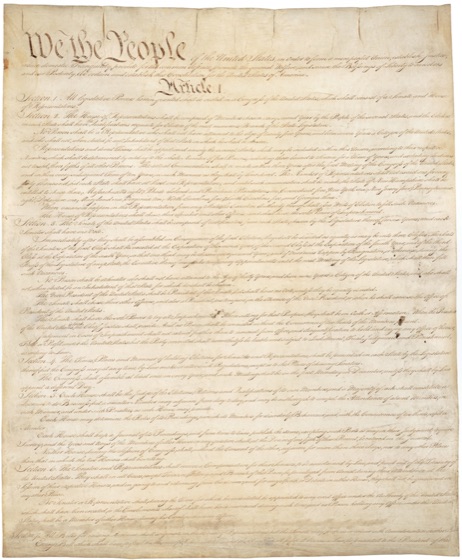
This is bigger than me.U.S. Const. art. I, § 8, cl. 8 — the clause empowering Congress to secure inventors an exclusive right. This sort of predatory patenting — enthusiastically enabled by the USPTO — is a real and growing problem. If you don't want to pay for technology that is rightly someone else's, you can just manufacture the same basic ownership document, muddy the waters, and confuse the public. They get to say “we have a patent” (which would be perfectly fine if they'd invented something — I don't believe they did). Meanwhile, the original inventor (that's me) no longer gets to claim “the exclusive Right to [my] respective Writings and Discoveries” (in my view, they took both) — this is the bargain that Article I, Section 8, Clause 8 empowers Congress to strike with inventors. Strictly, the clause is a grant of power to Congress, not a personal guarantee — the patent right itself is statutory — but it's the constitutional bargain the whole system is supposed to honor.
Here's the biggest answer. Because I couldn't compete with Big Corp, and couldn't find financial backers with the waters muddied (which, in my opinion, was the point), I had to shelve the development. I had a working prototype — ready for production and expensive industrial certifications. As an inventor, that was painful.
The PTAB is often used as a cudgel to destroy inventors… but I was already destroyed — by what I'd watched the system do to inventors before me.
So here I am: no fair license, a functional prototype on the shelf, and no way to compete (the patent was supposed to be my leverage in the market). There is no pending litigation, which makes this PGR the purest of requests. This patent should never have issued, full stop. That needs to be set straight.
And it is a little embarrassing. I'll say here what I say on the About page: yes, I know I am an idiot for pursuing this. The rational financial move is to eat the loss and move on. I'm not going to. I welcome you to tell me why I'm wrong — the discussion thread is right below.
What's coming
In the dispatches ahead, with receipts where I can share them:
What a Post Grant Review actually is, and why it's the tool that fits this mess.
The third-party preissuance submission in detail — the prior art I cited, and what “considered by the examiner” turned out to mean in practice.
How, as I see it, the applicant bamboozled their way through the system.
The arguments, in human language. So you and I can understand what really happened.
Whatever the Office and the respondent do next. I genuinely don't know how this ends.
If you want to follow along, the cleanest ways are the RSS feed, email (see the home page), or LinkedIn — this is cross-posted there, and you're welcome to argue with me there or in the discussion thread below.
Feedback
Seriously, I welcome feedback, corrections, commentary, or even the occasional anonymous trolling comment.
Thanks for reading Dispatch No. 1. There will be more.



Discussion
This dispatch is cross-posted on LinkedIn. React and comment there, or use the thread below.