
Dispatch No. 22 ← Previous ↰ All Next →
§ 102 — Nothing New Here


§ 102 — Anticipation is the novelty test: if a single prior-art reference already shows every element of a claim, the claim isn’t new. My own publication shows all of it on its own. A second prior-art document covers it too. In a functional system, either of these should have worked. But this isn’t a story about a functional system.
Background — part of my pro se Post Grant Review of U.S. Patent 12,460,537, which I believe copies rotation-sensing I disclosed first. This one is the § 102 ground: every element of the key claim already sits in a single prior-art reference — my own publication, and a second document too. New here? Start at Dispatch No. 1.
§ 102 — The examiner's objection on the key claim
The § 102 rejection was on claim 7 — the direction-change claim, which the applicant later folded into amended claim 1 in the RCE. Claim 7 is the one requiring that rotation sensing be gated to a single stroke, delimited by three direction changes: begin at the first, continue through the second, cease at the third. The examiner cited my own publication as anticipating every element. The applicant pushed back. Then the examiner folded.
§ 102 is a good one — if it's applied right. It wasn't. The examiner repeated the same § 102 objection twice, and the second time it was watered down instead of strengthened. That had me concerned. The examiner wasn't paying attention. But it was a Final. How much can I complain about that?
Here's the examiner's entire analysis of claim 7 in the Final OA:
[Final OA, Regarding Claim 7]
Phillips further teaches the sensor system of claim 5, wherein the processor subsystem is configured to continue sampling the rotational velocity along substantially an entire stroke of the at least one rod, the sampling beginning at a first change of direction of the at least one rod, continuing through a second change of direction of the at least one rod, and ceasing at a third change of direction of the at least one rod [0029; 0110].
That's it. The most important claim in the application — the one with the three direction changes, the one the applicant had spent the whole prosecution trying to protect — gets two paragraph citations and no explanation of how I teach any of it. No walkthrough. No mapping of the elements. Just [0029; 0110]. There were several other paragraphs and at least two figures worth citing. But there it is, a § 102. Not a thorough one, but a § 102 nonetheless. That's what the applicant had to beat.
Let's jump straight into the applicant arguments/remarks (RCE):
You can read it on page 2. This is the core argument, and I'll take it line by line.
[Their RCE Arguments]
The Final Office Action points to various generic statements in Phillips references stokes [sic †] and potential differences in sensing rotation and/or axial movement.
I don't even know what to make of this one. The applicant seems to be making my case for me — that the examiner's analysis wasn't thorough or detailed. Think about it: if the examiner had written a tight, element-by-element mapping with specific citations to my disclosure, there'd be nothing to call "generic." By complaining about the quality of the rejection, the applicant is implicitly conceding that a rigorous one would have been harder to answer.
† They keep misspelling this — their spellcheck must be set to Spicoli. You might not believe me, but I know a guy who knows a guy who supposedly knew the real Spicoli. ↩
[Their RCE Arguments]
However, there is no disclosure in Phillips of the particular chain of sensing events, including explicitly reciting the conditions for the starting and stopping events of the rotational sensing, as detailed in amended claim 1. (emphasis mine)

Their earlier remarks set up the governing test for § 102: anticipation means "each and every element as set forth in the claim is found, either expressly or inherently described, in a single prior art reference" — that's Verdegaal, which they cite. That was in the first response, but not in the RCE. This is important because inherently is an operative word that they conveniently omitted in the RCE remarks.

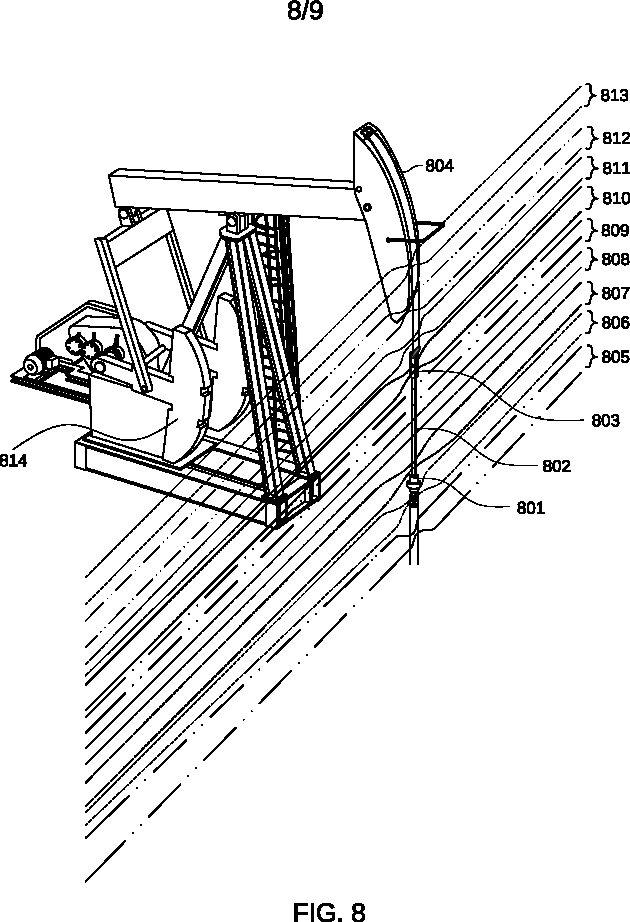
Read that again: expressly or inherently. One of the applicant's implications (RCE) is that the prior art needs to recite those elements in the exact words. But that has never been the test. The MPEP says it: anticipation is not an ipsissimis verbis test — "identity of terminology is not required" (In re Bond, 910 F.2d 831). That's the wording point: same element, different words, still anticipates. Separately — and this is a distinct doctrine, the other half of Verdegaal's "expressly or inherently" — an element that's never spelled out at all can still anticipate if it's inherently (necessarily) present. Different words, or no words but necessarily there: either way it counts. And mine is there both ways: my Figure 8 inherently discloses the better part of this — a picture is worth a thousand words, and there it is. Pair that with the examiner twice confirming that I teach this, and the anticipation argument should have been airtight.
[Their RCE Arguments]
First, there is no disclosure in Phillips that rotation sensing only occurs once a direction change is sensed, indicating that a new stroke is beginning.
But I do — there's my whole [0082] bit where I say "An accelerometer can be used to detect the accelerations imparted by the directional reversals caused by stroking action." I also talk about the magnetometer in this same paragraph: "The magnetometer experiences a range of field distortions as the sensor moves closer and further from steel objects in the pumping system. Short term variation in the magnetometer readings can therefore also be indicative of stroking action."
You might say "stroking action" isn't the same as a "direction change," but I discuss the direction changes in that same paragraph. I even tie the two together with the stroking action. That's a straight throughline that clearly and explicitly states this. This is the unresolved, undiscussed, relevant prior art that shows the examiner half-assed this examination.
I think it's clear that I state this explicitly: I'm showing here that the magnetometer can do it too. But that's why the "inherently" is also part of Verdegaal. Even if you argue I didn't explicitly state it, you have to admit it's there implicitly. The term inherently is so important — and it's so frustrating that they could just drop that key phrase and argue in the RCE that it had to be stated "explicitly". It's right there in their RCE Arguments — they conveniently omitted "inherently," making it seem like explicitly was the bar, when it clearly isn't.
The examiner should have known the difference. The resulting Notice of Allowance doesn't indicate that was the case.
Another misrepresentation? See a pattern forming?
Raising the bar to explicitly — while quietly dropping inherently — is, in my view, the misrepresentation. The applicable standard, their own Verdegaal cite, requires neither exact wording nor explicit statement of every element. Misrepresenting that bar back to the examiner in the RCE is highly unethical, in my opinion.
My paragraph [0082] is a technically accurate description — I'm not grafting a hand-wavy direction change conclusion onto a sensor that can't, by itself, cleanly detect one. § 102 doesn't care if it works, but I do. The magnetometer can pick up stroking action, but it's hard. A magnetometer does not provide a change in direction on its own. You need to do a lot of processing to determine that. I would have more accurately called it a proximity reading. Oh wait, I did:
[My disclosure]
[00132] … The magnitude of the distortions can dominate the reading depending on the proximity of the sensor to the ferrous material present in the pumping system. The wellhead 801, horsehead 804, counterweights 814, etc. all create distortions and act at different longitudinal positions during the motion of the sensor. …
You should go read my disclosure paragraphs [00128]-[00133]. It's mostly on the calibration of the magnetometer because that is the more interesting problem. Still [00132] provides the more precise description of what a magnetometer senses. I wouldn't use the term "direction change" because that's technically wrong. You can see increasing and decreasing field strength, caused by changing proximity, which is inferable as a direction change, but simply saying a direction change oversimplifies the problem. It took me 6 paragraphs to attempt to describe the problem. But this is all straying way outside the bounds of § 102.
For the magnetometer I don't even need inherency, because [0082] says it expressly: short-term magnetometer variation “can therefore also be indicative of stroking action.” That's the element, on the page, in plain words. The fact that it's hard to do isn't a § 102 problem at all — difficulty goes to enablement or obviousness, never to whether the disclosure is there. (I save the real inherency argument for the part that truly can't not be there: three direction changes necessarily bounding a stroke.) Remember, I'm an engineer. I wanted to get this technically right. I wasn't trying to BS my way through the process.
Does my disclosure actually gate the sensing to the stroke? Yep.
Sensing rotation during a stroke is one thing — the claim wants the sampling to begin at the first change of direction, continue through the second, and cease at the third. That's a gating step. Does my disclosure gate it that way, or does it just sense whenever it feels like it?
It gates. My disclosure doesn't just sense rotation around the clock and carve a stroke out after the fact — the processor only goes looking for rotation while the unit is stroking. I say it three different ways:
[My disclosure, [0026]]
…the processor is configured to only generate the alarm during periods where the unit is stroking and rotation is not present. Rotation during idle periods is not expected and therefore does not need to be considered.
[My disclosure, [0041]]
…the processor is not required to determine rod rotation speed, but only to detect if rod rotation is actually taking place during periods of expected rotation, namely, when the rod lift system is stroking.
[My disclosure, [0087]]
…If the pumping unit 110 is running [i.e., stroking], then the processor knows to expect and detect changes in rotational position.
So the rotation sensing is fenced to the stroking window. And how do I know the unit is stroking? By the directional reversals themselves — back to [0082], the "directional reversals caused by stroking action" are exactly what "indicate that the pumping unit is stroking." Stack those two facts: rotation sensing is gated to stroking, and stroking is marked by the direction changes. The sampling therefore has to begin at a direction change and cease at a later one. That's not a bonus step I'm reading into the page — it's where my disclosure's own gating switches on and off. The claim just slaps the labels "first," "second," and "third" onto those necessary and inherent stroke boundaries.
And here's the kicker: their patent makes the argument for me. Their own specification defines those three changes as marking "the completion of a complete up and down stoke" [sic] (the '537 patent, [0049]). By their own lexicography, "a stroke" is "first-change-through-third-change." So "sample over a single stroke" and "sample from the first to the third direction change" are the same act, by their definition, not mine. That's about as pure as inherency gets: it can't not be there.
How did the examiner forget this? It was all laid out so clearly. When you only hear from one side, you start believing the arguments. It's sad, but not surprising, given the way the US patent system was built.
Unnecessary complication, for a necessary feature
[Their RCE Arguments]
Second, there is no disclosure in Phillips that the sensing then continues during a second change in direction.
Keep doing what you're doing. At what point can you stop listing out things that are necessarily there? If you do something over the course of a stroke, you don't just maybe hit a second direction change — a full stroke necessarily contains it. That's the strict kind of inherency § 102 actually requires: not "a POSITA would probably see it," but "it can't not be there." Same with the other two changes in direction. They are fundamentally part of "a stroke". We'd more commonly call those the beginning and end of the stroke. Remember, 4-bar linkages are thousands of years old. They probably came shortly after the wheel was invented. That's how fundamental it is.
And I talk about that a lot. More than once. About 20 times and in different contexts. A stroke is a fundamental unit of analysis in this art. It's not overly complicated. Not the kind of thing that requires a POSITA. The thing goes up and down… We analyze one of those up and down motions to see what it's doing. It gives us a snapshot of the system in one glance. It's that fundamental.
Another well-defined and necessary feature
[Their RCE Arguments]
Finally, there is no disclosure in Phillips of then ceasing the sensing once a third change in direction is detected.
Again, ceasing the sensing at a direction change is the very definition of a stroke boundary. There's a deeper discussion here that I'll save for another § 112 post. There's a very clear technical hurdle here, but that's way off topic for a § 102.
[Their RCE Arguments]
There appears to be no particulars in Phillips relating to other actions taking [sic] during only single stroke besides looking to the data from a single stroke.
From my [0029], a paragraph cited twice by the examiner: "In this instance, the accelerometer and gyroscope are configured to determine immediate rotational deflection of the bridle assembly during the course of a single stroke by way of an inertial reference."
That's it, that's their argument, directly refuted by the very paragraph the examiner cited, yet the examiner just said "uncle" and let it through. But clearly I disclosed each and every element, provided you understand the most basic mechanics of what a "stroke" is. I'm pulling from multiple paragraphs, but Arkley only bars stitching together disclosures not directly related to each other.
There's a clear throughline from [0029] to [0082]. These aren't disconnected concepts. The stroke ties them together. These paragraphs all describe one and the same sensor system — that's related disclosure, not the grab-bag Arkley forbids. (Their "say it exactly how we say it" implication is a separate mistake, and it's wrong too — the things all need to be in there and reasonably understood as such, not recited in those specific words.) That's what I have, all disclosed in this document.
All you really need is my Figure 8 and the [0029] quote above. That's it. That covers it. [0082] just makes it crystal clear and irrefutable (but still easily ignorable). There's also the [00128]-[00133] calibration sequence and [0026], [0041], and [0087]. I have a lot of content. The fact that the examiner missed, ignored, or just never bothered to look is quite disheartening.
I'm not done yet
That's one reference. My disclosure alone gets the § 102 job done. But remember that other document from Dispatch No. 4? The one the examiner cited in the First OA and then never mentioned again?
Each and every element. Let's go through this again with a separate document. Not combining references. This one works entirely on its own too:
First, there is no disclosure in
PhillipsFyfe that rotation sensing only occurs once a direction change is sensed, indicating that a new stroke is beginning.Second, there is no disclosure in
PhillipsFyfe that the sensing then continues during a second change in direction.Finally, there is no disclosure in
PhillipsFyfe of then ceasing the sensing once a third change in direction is detected.There appears to be no particulars in
PhillipsFyfe relating to other actions taking [sic] during only single stroke besides looking to the data from a single stroke.
[Fyfe]
[0032] … other displacement sensors … a magnetic sensor in the monitoring device … provides reference “ticks” in each pumpjack cycle … [in another embodiment] a laser or ultrasonic rangefinder provides direct measurements of minimum and maximum points, and a present position in, the pumpjack cycle; in this embodiment the measured position of the pumpjack cycle is reported with measured axial load and any observed vibration.
OK, I'm omitting intervening text to focus on the key elements. You'd probably say that is obscuring what they are actually talking about and that this paragraph is actually a stretch. Go read it yourself. It's talking about a lot more. Why? Because there's a lot more to talk about. Also, remember that's why "inherently" from Verdegaal is so important. It cuts off the strict "exactly the way we say it" argument this applicant was leaning on so heavily.
That's the problem with the "you need to say exactly what we say, how we say it" argument. That's not what § 102 is. This paragraph is enough to establish the elements in order in a reasonable reading. Not by a POSITA, but by someone with basic knowledge. A Person of Below Average Skill In The Art (PBASITA… is there a legal term for this? Say a high-school physics student). The key in this prior art is the "minimum and maximum". That's the change in direction. Thrice makes a stroke. That's not a stretch. There's vibration in there too.
Interestingly, this document calls it a cycle. No one calls it a cycle in the "Art", but I'll throw this fun fact in — these guys' main business is bicycle sensors, not oil field sensors. The terms "cycle" and "stroke" can be used interchangeably. They mean the same thing in just about any practical context here.
Here's the whole paragraph [0035]:
[Fyfe]
[0035] To improve position determined by double integration from accelerometer readings taken within the polished-rod dynamometer 261, we identify 1101 (FIG. 9) the same instant, or tick, of each stroke, such as with an external magnet and magnetometer, or recognize another repeating signal from the pumpjack combined with known pumpjack kinematics. We use this tick knowing the polished-rod velocity should be the same at the beginning and end of each identified stroke, and the polished-rod position should be the same at the beginning and end of the identified strokes. We also know, based upon the pumpjack design, the “range” of position from the maximum position minus the minimum position over the duration of the stroke.
That literally spells out the three direction changes on the magnetometer. It's in the context of the accelerometer, which is a far more interesting and useful concept for how we use accelerometers. I'll come back to this in a later post, but the accelerometer gives you a good position with a critical flaw. The magnetometer has problems with precise position, but is immune to that specific flaw. That's related to this, but a much bigger and better-known problem in the "Art," so clearly that would be the focus of the disclosure. In disclosing it, Fyfe also puts every piece the applicant claims is novel right there on the page (and no, it doesn't have to use their exact words — § 102 never required that).
Hindsight wordsmithing is not innovation
That's the problem with the whole workaround hindsight wordsmithing. There's a much cooler problem to be solved, so you disclose that. You focus on the real innovative problem. The less interesting stuff gets disclosed along the way, but isn't as interesting on its own, so it's there, but not the core focus. You don't waste words on things that are clearly part of the bigger thing you're disclosing. But then someone else, later and with hindsight, can focus on that thing you mentioned in passing… because it wasn't super critical. That's not innovation. There has to be consideration that the larger discussion also covered the less interesting thing, even if that wasn't the core focus of the text. That is the whole point of § 102 and the "inherency."
- The magnetometer can detect ends of stroke (since that's another way to say a direction change)… that's in there.
- Using a magnetometer as part of that… that's in there.
- Doing rotation sensing during that sensed stroke… that's in there.
- Vibration sensor… that's in there (explicitly in Fyfe, in mine you have to know that an accelerometer is inherently a vibration sensor).
None of this is a stretch. Every element is right there in the prior art. In two separate documents, each disclosing it in more than sufficient detail alone and independently. See Dispatch No. 4 for the back story on those two documents.
Now, the missing piece is doing rotation sensing only during a stroke (or cycle, or the direction changes, or whatever else you want to call it). For that we have a whole section titled Rod Rotator Monitor:
[Fyfe]
[0071] In an alternative embodiment, the polished-rod dynamometer 261 includes calibrated rotational accelerometers and rate-gyro sensors to sense rotational accelerations of the polished rod 224 resulting from each yank of the handle 219 of the rod rotator during each stroke of the polished rod …
Sensing, using a gyro, during a stroke. So Fyfe lays out every piece — the stroke boundaries from the magnetometer tick, plus rotation sensing during the stroke. What it doesn't spell out, in so many words, is gating the rotation sampling to those three direction changes (Fyfe uses the tick to clean up accelerometer position, not to start and stop the gyro). But once every piece is sitting on the same device, the gating follows from the device's own operation.
Now, a stickler will jump on the words "in an alternative embodiment" and say: for § 102 you can't bolt one embodiment onto another and call the result a single anticipating disclosure. Fair enough — but these aren't unrelated embodiments. [0035] ties the magnetometer "tick" to the polished-rod dynamometer 261, and [0071]'s rate-gyro rides on that same 261. It's one device described across a few paragraphs — the same hardware, the same application. Arkley's "picking and choosing" bar is at its weakest when both disclosures live on the same piece of hardware. Every element, every arrangement, in one device. That's § 102.
(And if someone insists [0071] is truly separate, they've handed me § 103 — combining two embodiments of the same reference on the same device for the same purpose is about as textbook an obviousness case as exists. The claim doesn't survive either way. But I don't think it comes to that.)
Note: Fyfe is actually a more complete prior art reference because it also contains the Tubing Rotation stuff for their claims 8-9 and 16-18. No need to combine separate references — Fyfe carries those claims on its own. See the section titled Tubing Rotation Monitoring. So when the examiner "forgot" to cite this in the Final Rejection and the NOA, that is a huge oversight.
Again, this was all in my Third-Party Preissuance Submission.
My real issue
My real grievance here is how easily the examiner dropped the § 102 objection raised in two consecutive office actions — the First OA and the Final. No discussion, just basically, "ok, you convinced me." I want an explanation of how it's not disclosed like you said it was, twice in a row. The public deserves explanation, not just me. This was all too easily dismissed.
Legal mumbo jumbo
I hate the way legal documents bury their citations. Here are the authorities they leaned on — and they actually set two separate bars, which the applicant blurs together. The first is wording: a reference doesn't have to use the claim's exact words (In re Bond — "identity of terminology is not required"). The second is real, and tougher: every element has to be there arranged as in the claim — in the same relationship and order, not merely present somewhere on the page (Net MoneyIN; and the other half of In re Bond, which says the elements "must be arranged as required by the claim"). The applicant's "chain of sensing events … starting … continues during a second … ceasing at a third" is really an arrangement argument wearing a wording argument's clothes — and it has a clean answer on its own terms.
That answer: the arrangement isn't merely reasonably there — it's there inherently, and inherent disclosure anticipates exactly as well as an express one (Verdegaal). And the inherency here is the definitional kind: it falls straight out of what "a stroke" is. By the '537's own lexicography, "a stroke" just is "first-change-through-third-change" (the '537 patent, [0049]). So sense anything "over a stroke" and you have, necessarily and in this exact sequence, a first change of direction, then a second, then a third — not because any single reference happens to spell out three reversals on its face, but because that sequence is what defines and bounds a stroke. So my disclosure clears both bars: every element, and their claimed arrangement, because the arrangement can't not be there. (The gating section above walks through exactly how the gating locks to those three changes.) Likewise that other prior art. Each document on its own, not combined. Only one was lightly discussed by the examiner. The other? Completely absent after the first Office Action.
- Verdegaal Brothers v. Union Oil Co. of California, 2 USPQ2d 1051, 1053 (Fed. Cir. 1987)
- Richardson v. Suzuki Motor Co., 9 USPQ2d 1913, 1920 (Fed. Cir. 1989)
- Net MoneyIN Inc. v. VeriSign Inc., 545 F.3d 1359, 1371 (Fed. Cir. 2008)
- In re Arkley, 455 F.2d 586, 587 (C.C.P.A. 1972)
Related dispatches
- Dispatch No. 4 — The first time this idea was good enough to copy — the earlier time this same idea was good enough to copy.
- Dispatch No. 6 — The Third-Party Preissuance Submission — the third-party submission I'd already filed.
- Dispatch No. 14 — My Apology to Good Examiners — the examination that raised this ground twice and then abandoned it.
- Dispatch No. 20 — New material, not in the disclosure — the new-matter limitation that, to the extent it means anything, I already disclosed.
- Dispatch No. 21 — § 101 — What Even Counts as an Invention — the previous dispatch.
- Dispatch No. 23 — § 103 — Obvious to Anyone in the Field — where the "alternative embodiment" combination becomes an even easier obviousness case.
- Dispatch No. 24 — § 112 — They Never Said How — the § 112 problem; its § 112(f) argument is the alternative to this dispatch's broad-claim § 102 reading.
- Dispatch No. 25 — TL;DR; §§ 101, 102, 103, and 112 — the one-page recap tying it all together.
- Dispatch No. 26 — TL;DR; All the system failures — the system-failure recap, including the dropped "inherently" § 102 standard.
- Dispatch No. 31 — Word Count — fitting this § 102 ground into the petition's word cap.
- Dispatch No. 33 — The PGR Petition — the petition that pleads this § 102 case, in the alternative, as Ground 2.
Discussion